

YouTube trending has shifted from a single destination toward category-specific charts and personalized discovery. On July 10, 2025, YouTube announced plans to remove its Trending page and Trending Now list, changing how viewers find popular videos and how creators should interpret visibility. Understanding that shift helps you separate chart popularity from audience relevance—and build a content strategy around both. (support.google.com)
What changed about YouTube trending?
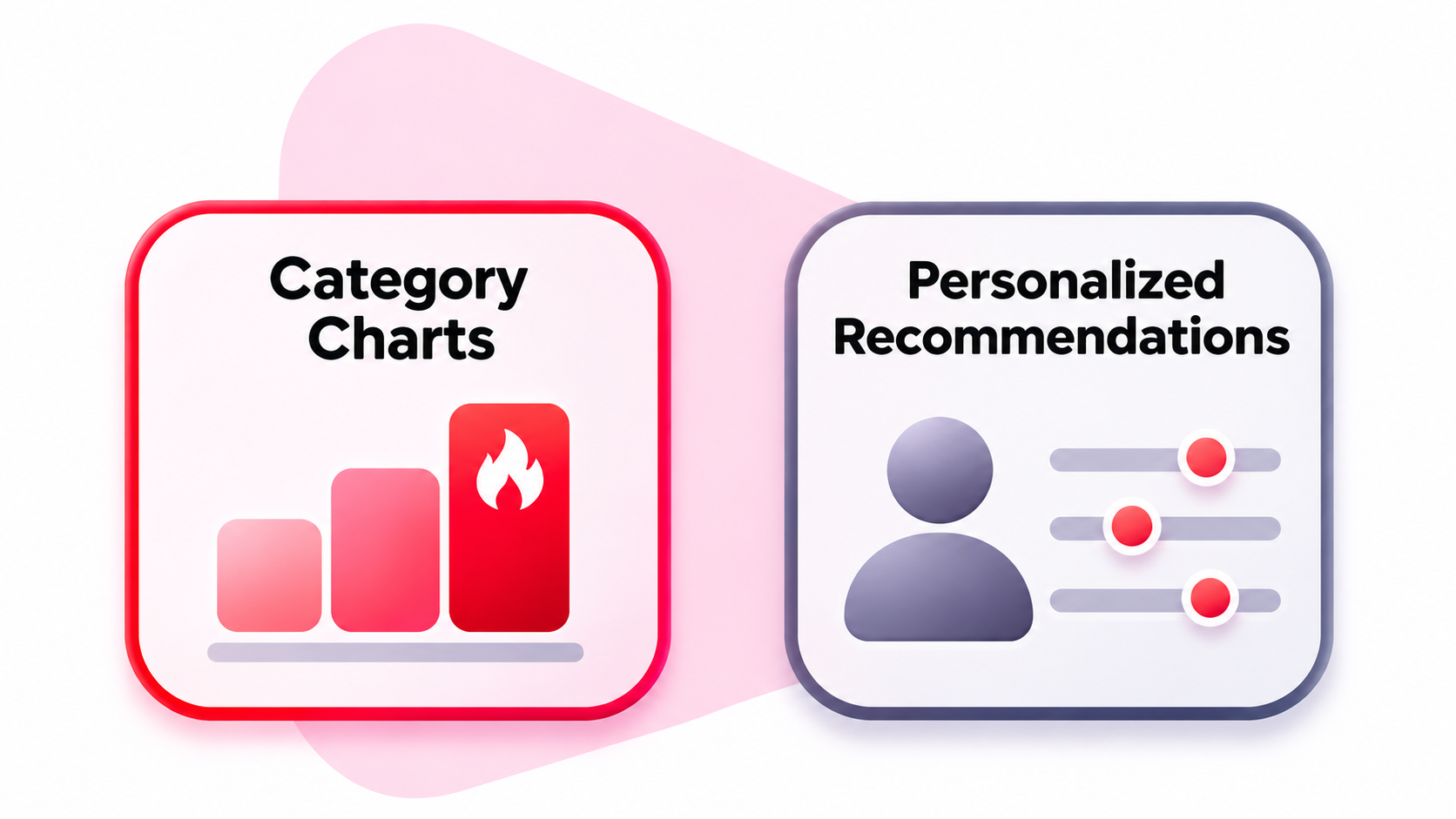
The central change was the move away from one broad Trending list toward charts for specific categories. YouTube explained that trends increasingly emerge across fandoms and communities, while viewers discover them through recommendations, search suggestions, Shorts, comments, and Communities. The company also reported declining visits to the old Trending page. (support.google.com)
That distinction matters: a change to where YouTube displays popular content is not automatically proof that it changed every underlying ranking signal. The announcement described a discovery shift, not a published formula revealing new algorithmic weights. Treat claims about a universal “new trending algorithm” cautiously unless they point to specific documentation. (support.google.com)
For creators, the practical response is to stop treating one leaderboard as the entire opportunity. Instead, ask two separate questions during planning: where is interest developing, and which part of that interest fits your audience? A broad cultural moment can inspire a useful niche video without requiring you to copy the largest upload discussing it.
See what people watch in your niche
Choose your niche in Hype and explore topics people already watch before you decide what to create next.
Explore Trending TopicsHow does YouTube decide which videos appear on trending charts?
YouTube’s trending charts combine multiple signals rather than ranking videos by total views alone. Its documentation identifies view count, view growth, traffic sources, topic, video age, and performance relative to a channel’s recent uploads. The exact weighting is not disclosed. (support.google.com)
Charts are not personalized: viewers in the same country see the same trending videos. YouTube says these charts refresh roughly every 30 minutes, so positions can change throughout the day. Category and location therefore belong beside any ranking you record. (support.google.com)
The published criteria have several practical implications:
- Momentum matters alongside scale. The highest-viewed video is not necessarily ranked first.
- Context matters. A video's topic, age, and channel history contribute to evaluation.
- Advertising is separate. Views from YouTube ads do not count toward trending-chart measurement.
- Placement cannot be purchased. YouTube says it does not accept payment for chart positions.
- Eligibility matters. Videos must be public, and chart content is subject to safety filters. (support.google.com)
Use these criteria as context, not a checklist promising placement. They explain why a simple view-count comparison cannot establish that one video deserves a higher position than another.
Trending charts and recommendations serve different purposes
A chart answers a shared popularity question within its scope. Recommendations answer a personal question: what might this viewer want to watch next? YouTube describes its recommendation goals as helping viewers find videos they want and maximizing long-term viewer satisfaction. Personalization and content performance both inform that process. (support.google.com)
Watch history, search history, subscriptions, likes, dislikes, feedback, and satisfaction surveys are among the signals YouTube identifies. This is why your homepage should not be treated as a neutral map of what everyone watches. A recurring subject in your feed can reflect your behavior rather than platform-wide momentum. (support.google.com)
When researching what is trending on YT, label your evidence before drawing conclusions:
| Evidence | Useful interpretation | Interpretation to avoid |
|---|---|---|
| Official category chart | Popularity within that chart’s category and market | A complete ranking of every YouTube topic |
| Your recommendations | Subjects the system considers relevant to you | Proof that everyone sees the same videos |
| Audience search insights | Questions worth investigating for your viewers | Guaranteed demand for any video using those words |
| Your channel results | Evidence about your own content and audience | A universal rule for every creator |
These distinctions follow from YouTube’s separate descriptions of charts, personalized recommendations, and audience research tools. Keep them separate in your research notes, too. (support.google.com)
Where can you find trending topics on YouTube now?
Start with official charts for supported categories, then use YouTube Studio’s Trends tab to investigate audience searches and content opportunities. YouTube identifies trending music videos and movie trailers among its chart categories, with trending gaming videos available through Gaming Explore. These destinations answer different questions, so use more than one source when developing ideas. (support.google.com)
If you search for a “youtube trending today list,” check what the resulting page actually measures. Before relying on any list, look for its country, category, update time, and ranking method. Without that context, “top” is too ambiguous to guide a publishing decision.
For channel-specific research, YouTube’s Trends tab can show what your audience and viewers across YouTube are searching for. It also highlights content gaps: situations where viewers cannot find enough quality results for a search. Feature availability can vary, so work with the insights your account actually displays. (support.google.com)
For an additional research stop, visit Hype’s Trending Topics page. Hype’s Trending Topics page is worth exploring alongside your regular discovery sources. Use it as a starting point for ideas, then validate any promising topic against official YouTube information and your audience needs before committing production time. (hype.ad)
Turn trend research into a repeatable publishing process
The goal is not to reproduce the top trending YouTube videos. It is to identify the underlying question, emotion, or practical need and decide whether you can address it meaningfully. Use the following workflow to make that decision explicit rather than publishing because a subject looks busy.
- Define the audience before the topic. Write down who the video serves and what they should understand or accomplish afterward. “People interested in this launch” is less useful than “beginners deciding whether this launch changes their setup.”
- Record the evidence. Note where you found the topic, when you checked it, and which audience or location it concerns. Save the source rather than relying on a screenshot without context.
- Identify the unanswered angle. Review several relevant videos and their discussions. Look for a missing explanation, an untested assumption, or a practical step you can demonstrate clearly.
- Choose a format that fits the task. A focused demonstration, comparison, or explanation should follow the viewer’s need. Do not stretch a small observation into a long video simply because competing uploads are lengthy.
- Set a realistic production deadline. Decide whether the idea requires immediate coverage or remains useful after the initial conversation fades. If you cannot publish responsibly in time, choose a more durable angle.
- Define success before publishing. Specify whether the purpose is discovery, deeper audience engagement, or answering a recurring question. This prevents a video from being judged only against an unrelated viral hit.
For example, imagine a major game update attracting attention. Rather than making another broad reaction, a tutorial channel could test one confusing mechanic and show the result. That is an editorial choice with a clear audience benefit—not a prediction of chart placement.
Measure the audience response, not just the spike
After publication, evaluate impressions and click-through rate together rather than declaring success or failure from one number. YouTube explains that CTR can decrease as a video reaches a broader audience. Strong CTR and average view duration also do not guarantee continued impression growth. (support.google.com)
For your review, compare the video with genuinely similar uploads. Separate the appeal of the topic from the clarity of the title and thumbnail, then consider whether the video delivers what its packaging promises. Frame your conclusions as hypotheses to test, not discoveries about a hidden formula.
A useful review note might say: “The topic attracted interest, but the introduction took too long to reach the demonstration.” That gives you a concrete editing decision for the next upload. “The algorithm stopped liking us” does not.
Build around relevance, not leaderboard chasing
YouTube’s discovery changes call for a broader research habit, not a secret optimization trick. Use charts to understand their particular slice of popularity, audience insights to investigate needs, and your own results to refine execution. Keep the evidence distinct and the viewer benefit clear. The strongest takeaway is simple: let trends inform your ideas without allowing them to replace your editorial judgment.
Find YouTube topics your audience cares about
Explore the topics people already watch in your niche, then validate a useful angle before you commit production time.
Explore Trending TopicsFrequently Asked Questions
- How are YouTube trending charts different from recommendations?
- YouTube trending charts show shared popularity within a category and country. Recommendations are personalized using signals such as viewing history, subscriptions, feedback, and satisfaction. Your homepage is therefore not a neutral ranking of what everyone watches.
- Does a high view count guarantee a place on YouTube trending charts?
- No. YouTube trending chart criteria include views, view growth, traffic sources, topic, video age, and performance relative to a channel’s recent uploads. The exact weighting is not disclosed, and total views alone do not determine chart positions.