

Beginner-friendly TikTok video ideas include quick tutorials, behind-the-scenes clips, honest experiments, and relatable everyday stories. Below, you’ll find practical prompts, sample opening lines, and a simple filming plan to turn those ideas into posts. Choose something you can show clearly rather than waiting for a perfect concept.
What should beginners post on TikTok?
Start with one small thing you can teach, demonstrate, document, or make entertaining. Try a desk reset, a lesson from learning a hobby, or a demonstration of something you use regularly. TikTok’s own business guidance includes tips, problem-and-solution stories, and product demonstrations among its suggested creative formats. (ads.tiktok.com)
For your first attempts, set a manageable brief: one subject, one main point, and one clear ending. Instead of covering your entire fitness journey, for example, document how you prepare your gym bag. Keep the scope small enough to finish without needing extra equipment or elaborate editing.
10 creative TikTok content ideas to try
Use these TikTok ideas for beginners as starting points, then add your own interests, opinions, or process. Pick three you could film with what you already have. Treat each suggested opening as a draft, not a line you must copy exactly.
1. Teach one tiny skill
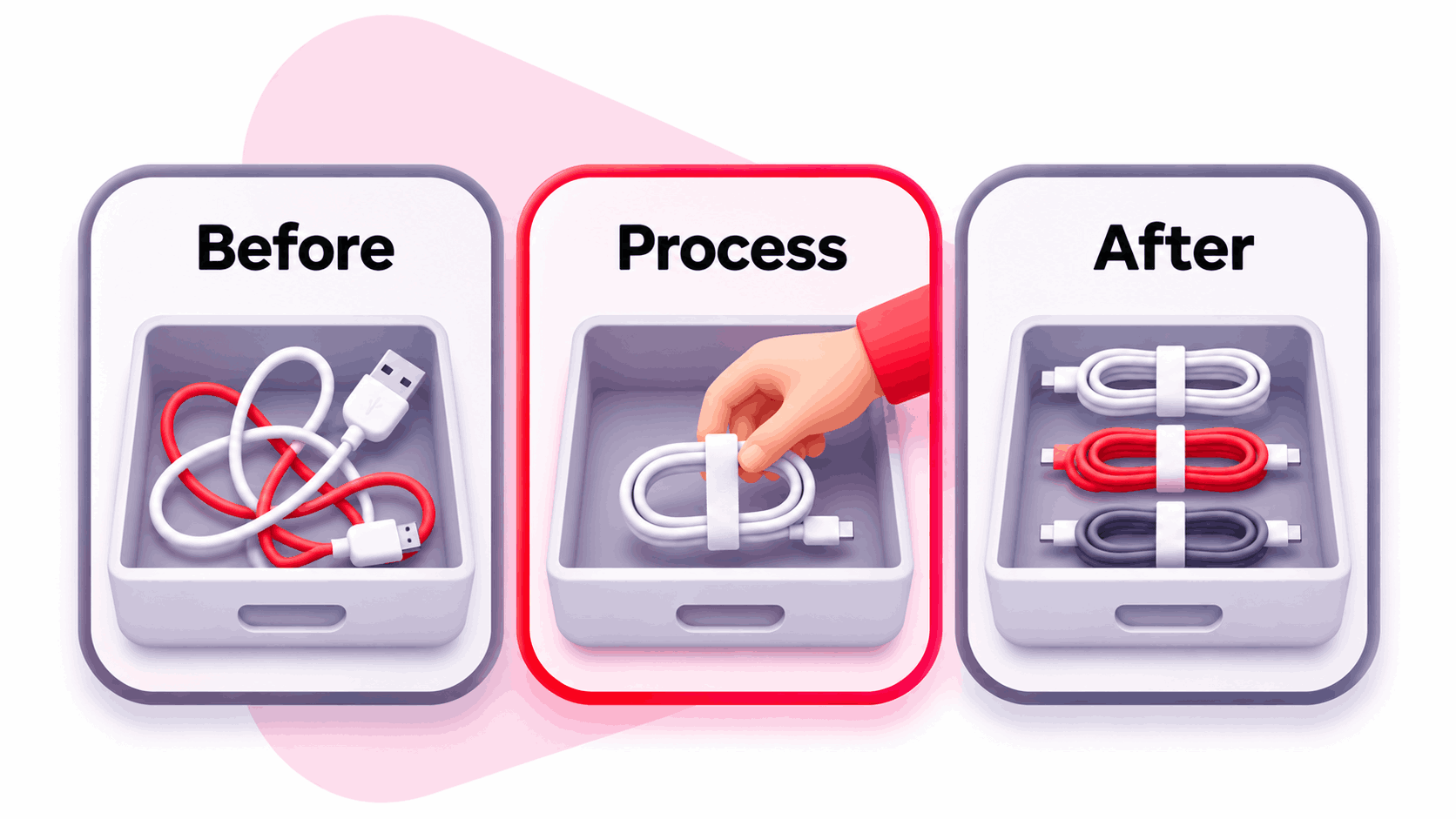
Choose something specific: folding a fitted sheet corner, drawing a leaf, or organizing charging cables. Open with the finished result, then demonstrate the essential steps. Try: “Here’s how I stop these cables from tangling.” Film close enough that someone could follow your hand movements, and leave out any introduction that delays the demonstration.
2. Share a before-and-after transformation
Try a bookshelf rearrangement, sketch revision, or messy-to-tidy workspace. Capture the starting point before changing anything, then show a few meaningful stages and the result. Keep the camera position similar so viewers can compare the two versions. Explain one decision you made along the way instead of relying entirely on a dramatic reveal.
3. Film a miniature day-in-the-life story
Skip the pressure to document an entire day. Follow one small storyline, such as making breakfast before an early class or preparing for an evening hobby session. Start with the task, include a complication, and show where you ended up. Try: “I had twenty minutes to get ready for pottery class.”
4. Test a tip and share your observations
Pick a harmless tip related to cooking, crafting, studying, or organization. State what you’re testing, show your attempt, and explain what happened for you. Avoid presenting one experiment as universal proof. An opening like “I tried labeling every drawer for a week” gives you a concrete experience to discuss, including anything you would change.
5. Tell a story about a beginner mistake
Choose a mistake with a useful lesson, not something you feel pressured to disclose. Explain what you expected, what actually happened, and what you would do differently. A beginner baker might discuss misreading a recipe step; a new artist could show an overworked sketch. Keep the focus on the lesson rather than a lengthy backstory.
6. Create a relatable point-of-view sketch
Build a short scene around an experience you know: opening your camera roll to find one photo, starting a new hobby, or forgetting why you entered a room. Use a text label to establish the situation, then act out one recognizable moment. Try playing both sides of a conversation, with a simple camera-angle change between characters.
7. Show your process without showing your face
Try an overhead drawing session, a packing sequence, or a close-up of assembling lunch. Add narration explaining your choices, or use short text labels for each stage. You could open with “Pack tomorrow’s lunch with me.” Choose a process with a visible beginning and ending, and remove private information from the frame before recording.
8. Compare two everyday options
Compare two ways to organize a bag, style a shirt, or arrange a workspace. Decide on a fair comparison point, such as convenience for your routine, and show both approaches under similar conditions. Explain your preference without declaring an absolute winner. Finish with the situation where you would choose the other option instead.
9. Answer one genuine question
Use a question a friend, customer, or fellow beginner has actually asked you. If you don’t have audience questions yet, choose something you wondered when starting. Put the question on screen, answer it immediately, then demonstrate or explain. For example: “What do I keep in my beginner watercolor kit?” Show only what supports your answer.
10. Start a small progress series
Document learning one skill over several attempts, such as lettering, juggling, or basic sewing. Give each installment its own result: what you practiced, what changed, and what remains difficult. Name the series clearly so related posts feel connected. Avoid withholding the useful part just to create another episode; make each update worth watching on its own.
Turn your first TikTok idea into a script
Explore Reel ideas and generate a script with a clear opening, useful steps, and a strong ending.
Create Your TikTok Script →Adapt TikTok content ideas for business
For business-focused posts, try starting with a customer’s practical question rather than a product announcement. TikTok’s business storytelling guidance suggests framing product benefits as solutions to problems, personal anecdotes, or reasons customers choose an offering. Use that as a planning prompt, not a requirement to make every post promotional. (ads.tiktok.com)
Consider these TikTok post ideas:
- Demonstrate one use case: Show how a product fits into a specific task, rather than listing every feature. A bag demonstration could focus on packing for a short outing.
- Explain a choice: Compare two options you offer and describe who each might suit. Use actual differences you can demonstrate, without inventing performance claims.
- Show the work: Film a preparation, making, or checking process. Explain what you are doing, while keeping customer information and confidential details out of view.
- Answer a buying question: Address something customers genuinely ask, such as what is included or how to care for an item. Keep details consistent with your actual offering.
End with a relevant next step, such as exploring available options or asking a specific question. Reserve direct sales language for posts where purchasing naturally follows the explanation.
Turn an idea into a clear video
Give your chosen concept a beginning, middle, and ending before you record. TikTok’s advertising guidance calls this a hook, body, and close: establish interest, deliver the message, then finish with a clear next step. You can borrow that structure for an ordinary tutorial or personal story without turning it into an advertisement. (ads.tiktok.com)
Use this filming checklist:
- Write the opening. Name the task or situation: “Help me organize this drawer without buying containers.”
- List essential shots. Capture the starting point, important actions, and final result. Record a missing detail before putting everything away.
- Check your framing. Film vertically and leave room for interface elements, following TikTok’s production guidance. Keep important objects and text away from crowded edges. (ads.tiktok.com)
- Make the explanation readable. Add and check captions for spoken instructions. TikTok recommends captions or on-screen text so the story remains understandable without sound. (ads.tiktok.com)
- Finish the promise. Show the result or deliver the answer before asking viewers to comment or follow.
For more things to post on TikTok, revisit an existing idea from a different angle: demonstrate it, explain a mistake, then compare alternatives. Keep each version distinct rather than repeating the same script.
Can you choose TikTok video ideas that will go viral?
You cannot reliably select a concept that guarantees viral reach. TikTok’s own creative guidance says there is no single video formula for success, so treat “TikTok video ideas that will go viral” as inspiration-seeking language, not a realistic promise. Choose something you can execute honestly and clearly, then learn from the response. (ads.tiktok.com)
After publishing several posts, review your analytics for patterns rather than judging everything by one result. TikTok recommends using video analytics to understand audience interests. Compare similar posts and look for subjects or approaches worth exploring again; write down a follow-up idea while the lesson is fresh. (newsroom.tiktok.com)
Build your next three posts
Choose one teaching idea, one personal story, and one process video from this list. Write an opening for each, gather the materials, and record whichever feels easiest first. Save unfinished concepts in a note with the next shot or sentence they need.
Good TikTok ideas don’t need to be elaborate. Start with a specific moment, make the point clear, and give yourself room to improve. Your next post is a chance to practice—not a final verdict on your creativity.
Plan your next three TikTok posts
Use Hype to explore Reel ideas and turn your next tutorial, personal story, or process video into a script.
Find Ideas and Generate Scripts →